


ACMECS

Ayeyawady – Chao Phraya – Mekong Economic Cooperation Strategy

Five Mekong countries, one sub-region: cooperating for seamless, synchronized, smart and sustainable growth.

Cambodia · Lao PDR · Myanmar · Thailand · Viet Nam
Who we are

Three rivers, five countries, one shared future

The Ayeyawady – Chao Phraya – Mekong Economic Cooperation Strategy, or ACMECS, was established in 2003 as a platform to stimulate the economic cooperation and development of the sub-region revolving around the three major rivers – the Ayeyawady in Myanmar, the Chao Phraya in Thailand, and the Mekong which runs through Thailand, Lao PDR, Cambodia, and Viet Nam.

Read our history
Member countries
  • Cambodia
  • Lao PDR
  • Myanmar
  • Thailand
  • Viet Nam
Established
2003
Member countries
5
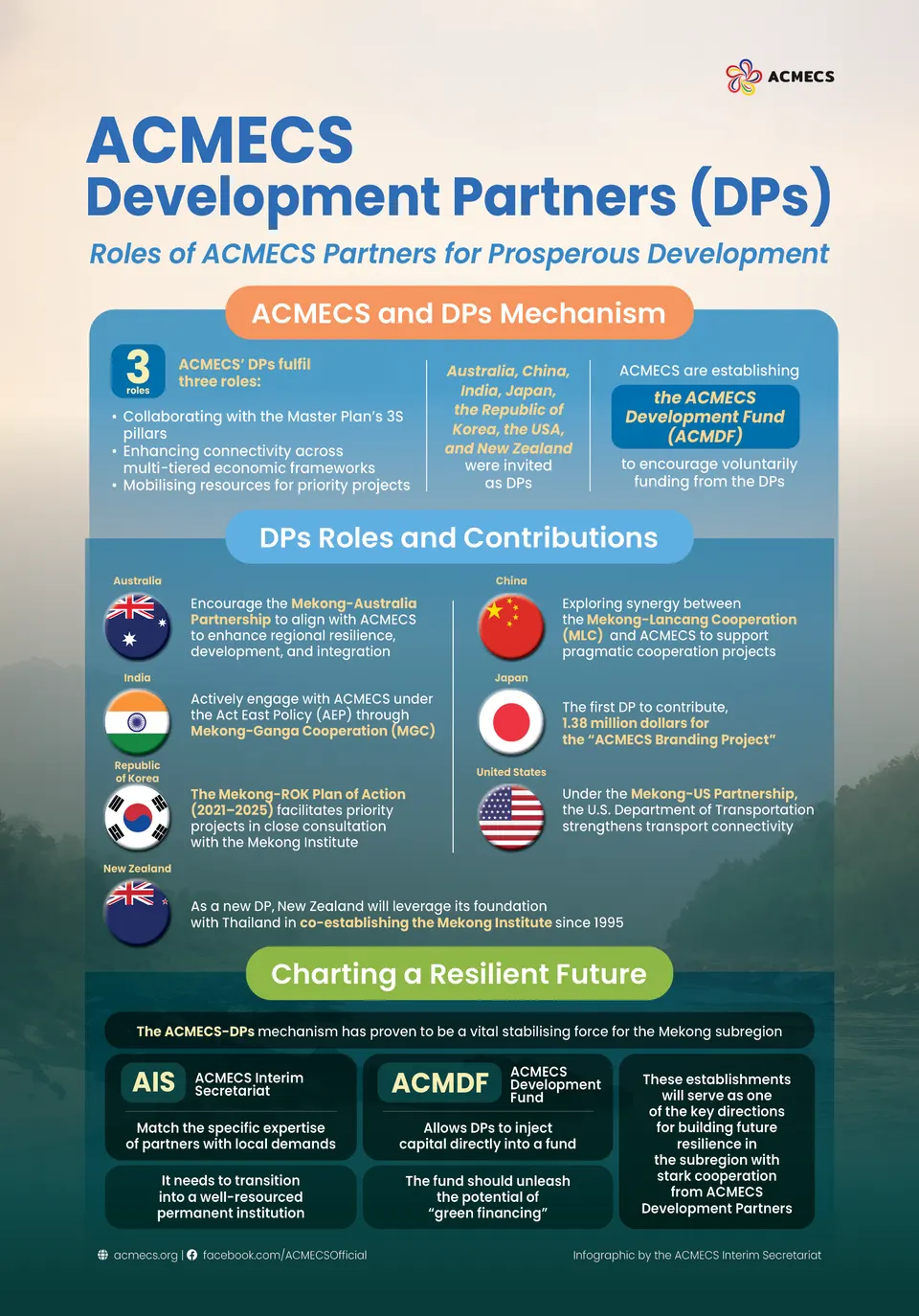
Development partners
7
Master Plan 2019–2023

Three pillars of cooperation

View the Master Plan
  1. Pillar 01

    Seamless ACMECS

    Promote seamless connectivity through multi-modal transport links.

  2. Pillar 02

    Synchronized ACMECS

    Enhance software connectivity by fostering trade, investment, industrial cooperation, and financial cooperation.

  3. Pillar 03

    Smart and Sustainable ACMECS

    Promote the development of human capital in strategic areas, while retaining existing areas of cooperation established under ACMECS.

News and events

Latest from ACMECS

All news & events
News

Director-General of the Department of International Economic Affairs met Mekong Institute Executive Director to discuss how to advance cooperation in the Mekong subregion

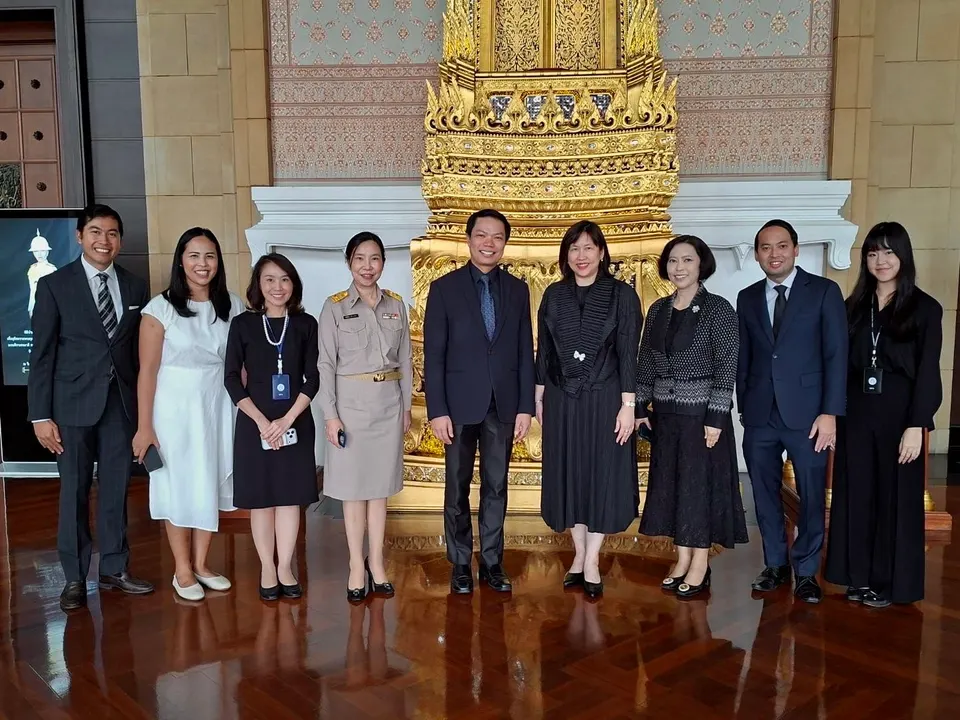
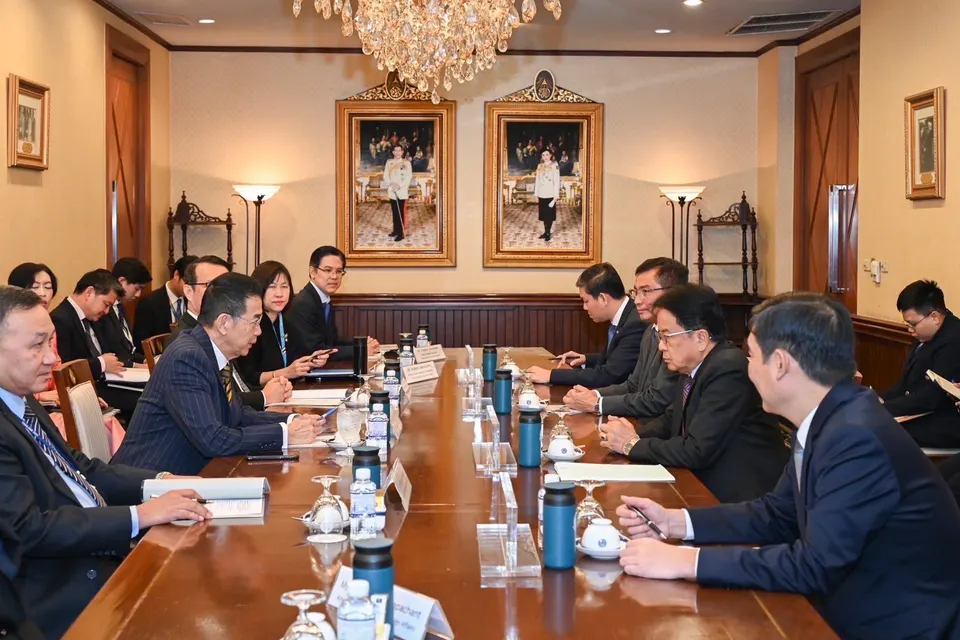
On September 18, 2026, Ms. Rujikorn Saengchantr, Director-General of the Department of International Economic Affairs, met with Dr. Anoulak Kittikhoun to mark his appointment as the 7th Executive Director of the Mekong Institute (MI). The leaders discussed strengthening subregional connectivity and sustainability through the Ayeyawady - Chao Phraya - Mekong Economic Cooperation Strategy (ACMECS) framework, specifically targeting critical shared challenges such as water resource management, transboundary haze pollution, and transnational crime. Additionally, they highlighted expanding MI's strategic role as an academic and technical advisor, particularly in supporting the ACMECS Interim Secretariat under its Memorandum of Understanding with Thailand's Ministry of Foreign Affairs.

Explore ACMECS

Articles

All articles
Article

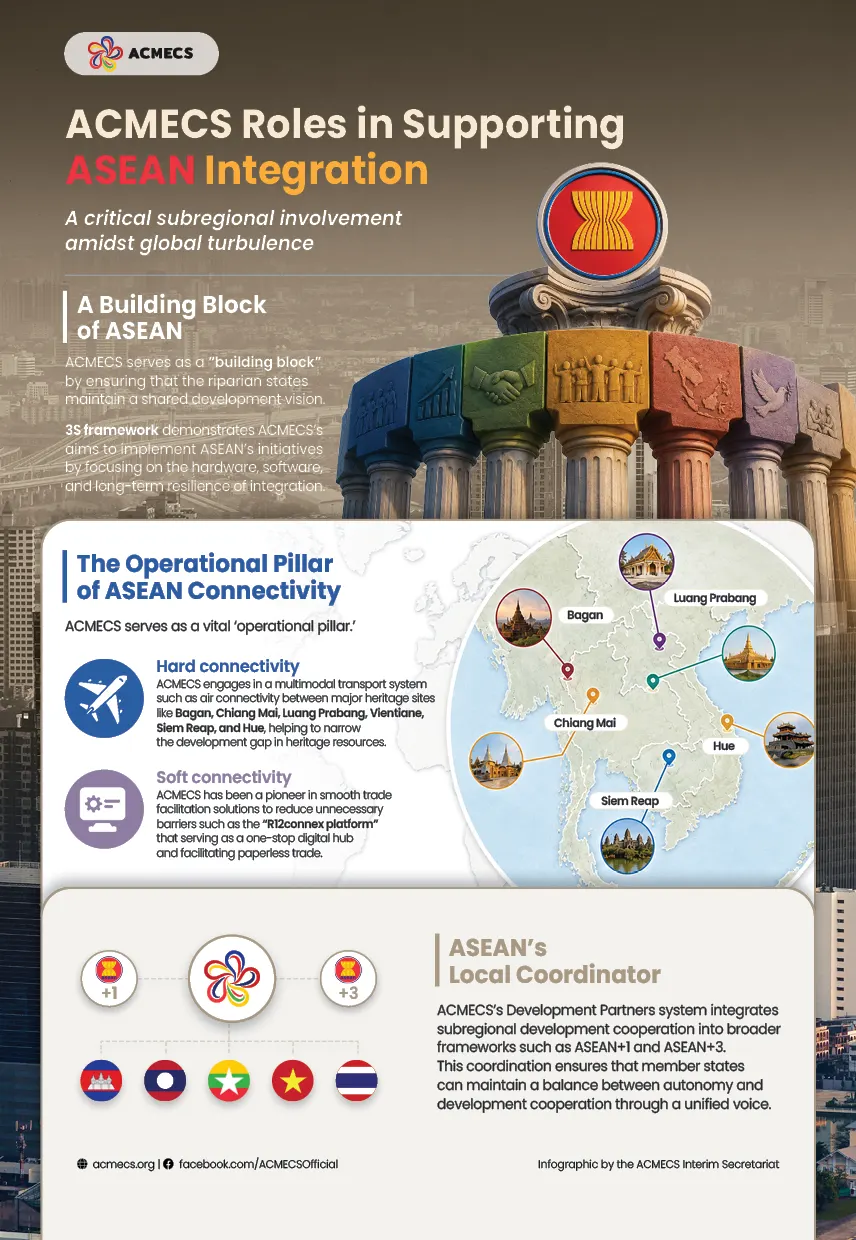
ACMECS Roles in Supporting ASEAN integration

ACMECS has effectively coordinated with other subregional mechanisms by positioning itself as an open platform highly aligned with ASEAN Centrality. … Such a coordination model not only prevents the fragmentation of the regional architecture but also ensures that member states, while efficiently tapping into international resources, can maintain a balance between autonomy and development cooperation through a unified voice.

Article

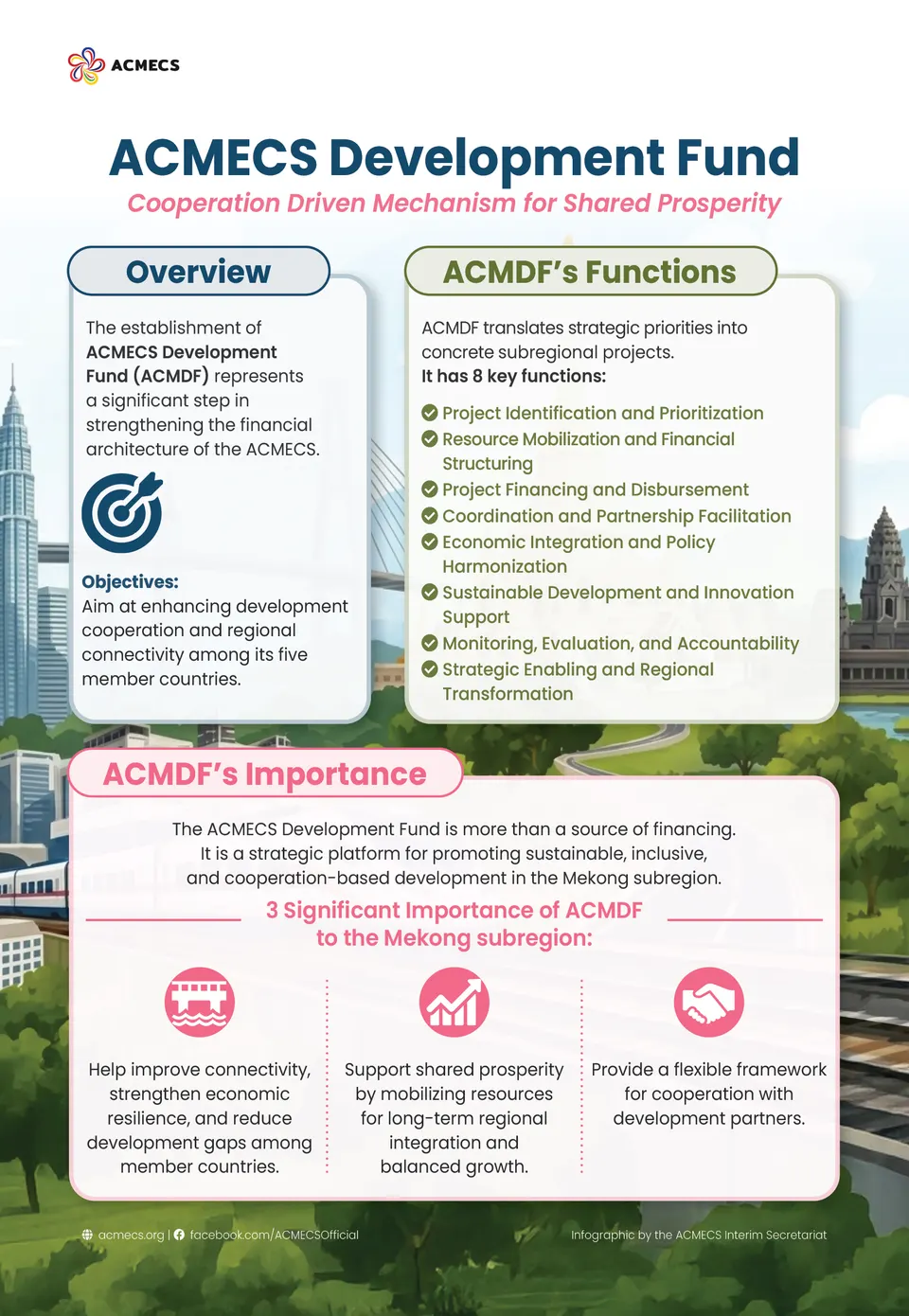
ACMECS Development Fund: Cooperation-Driven Mechanism for Shared Prosperity

The Fund is also important because it provides a flexible framework for cooperation with development partners. Partners can support ACMECS in several ways, such as funding specific projects, creating country-focused funding arrangements that match their own priorities, or contributing to a common regional pool. This flexibility makes the Fund attractive to external partners and helps align their expertise with the needs of the Mekong subregion.

Article

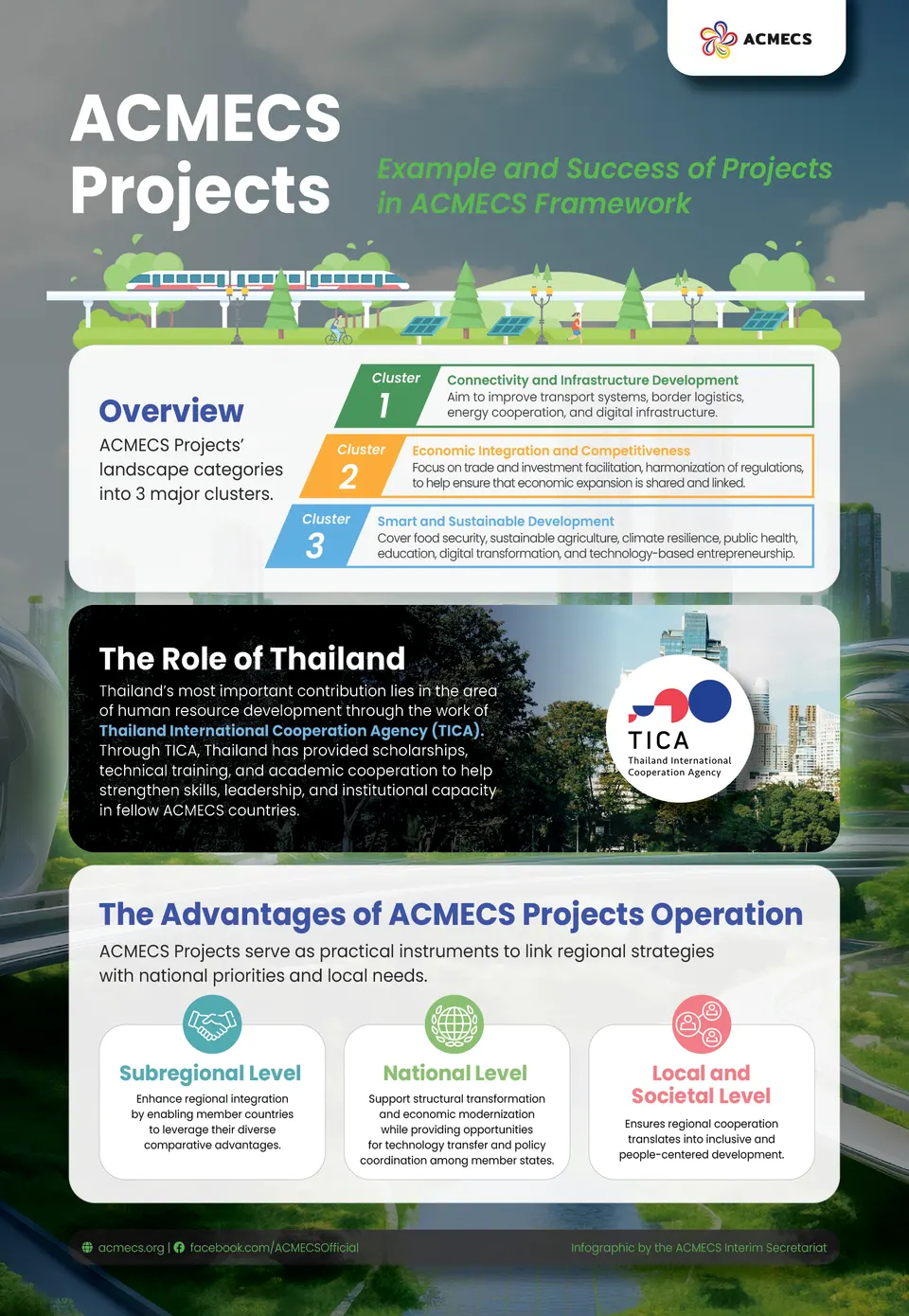
Example and Success of Ongoing Projects in ACMECS Framework

At the local and societal level, the benefits of ACMECS projects become more visible in everyday life. Cooperation in sectors such as education, health, energy, and climate adaptation further strengthens social well-being and community resilience. In particular, the growing emphasis on ‘soft connectivity’—including knowledge exchange, human resource development, and people-to-people links—ensures that regional cooperation translates into inclusive and people-centered development.